Exercise Circaete 2018 is accomplished.
The Air Forces of 5+5 Initiative Member Countries were engaged in a scenario simulating an air terrorist threat.
A group of terrorists aboard a scheduled flight hijacks the aircraft and forces the crew to change route. This sets off the international airspace defence system. This is the scenario of Circaete 2018, the air defence exercise that took place a few days ago in the Mediterranean skies. The Member Countries of the 5+5 Defence Initiative participated in the exercise to test the preparedness of surveillance and defence national systems in countering non-military air threats and in promoting a coordinated use of relevant command and control centres, radar sites, and interceptors.
The cooperation agreement was done in 2004 following an Italian proposal. It aims to promote cooperation regarding common issues related to security and defence. It is also designed to help regional stability and mutual understanding among the Countries of the two shores of the Western Mediterranean: the northern shore comprising France, Italy, Malta, Portugal and Spain, and the southern shore comprising Algeria, Libya, Mauritania, Morocco and Tunisia.
The Italian Air Force organized Circaete 2018, in the year of Italian presidency of the 5+5 Defence Initiative. It is one of the activities promoted by the Ministry of Defence to identify common cooperation solutions and projects, in particular in the field of maritime surveillance, military support to Civil Protection, training and research and, indeed, in the field of air defence.
Air security is an actual threat, as recent episodes prove: the hijacking of Libyan Airbus 320 2016 - which eventually landed in Malta - on 23 December and the hijacking to Geneva of the Ethiopian Airlines aircraft scheduled to flight from Addis Ababa to Rome on 17 February 2017. In this regard, the Air Force has been promoting initiatives that specifically aim to improve mutual knowledge and the interoperability of the 10 Members Countries' air forces. In doing so, the Air Force has made available the capabilities developed in some specific operational and technological domains, such as command and control electronic systems, UAVs, SAR, and Personnel Recovery.
The exercise scenario is the following: a military transport aircraft - in this case an Italian Falcon 900 EASy belonging to the 21st Wing of the Air Force - simulates being a so-called "renegade" aircraft. In technical jargon terms, renegade aircraft are civilian aircraft reaching or crossing national airspace and whose conduct may be dangerous to security as it may potentially result from a terrorist act.
Command and control centres and radar surveillance sites of countries crossed by the aircraft routes, as well as pilots and crews of involved air defence bases, shall react in a prompt and coordinated manner to intercept and push - as in reality - the threat outside national airspace or force the aircraft to land in a designated airport, according to ground control's instructions and according to defined protocols.
This yearly exercise specifically aims to promote and strengthen the adoption of common procedures in managing such cases, where individual nations maintain their responsibility but coordinating neighbouring countries' response is crucial, considering the quickness and complexity of required actions.
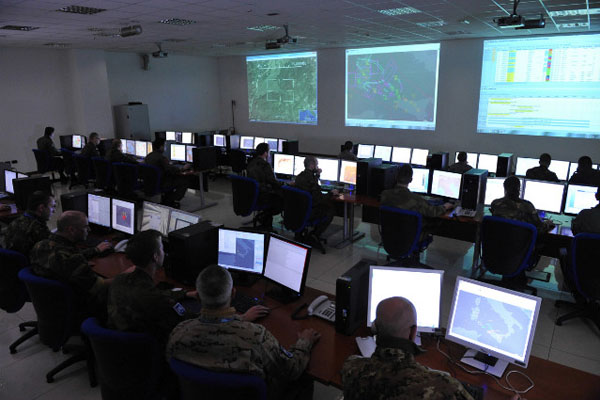
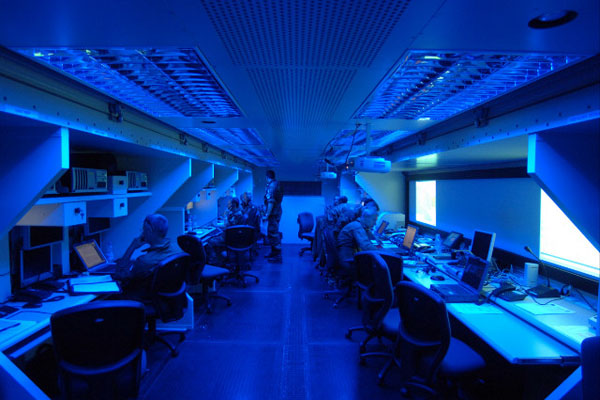
The Air Operations Center of the Air Operations Command in Poggio Renatico (Ferrara) managed the part of exercise taking place in the Italian airspace. The Air Operations Center is the Air Force command and control centre that ensures 24/7 national airspace surveillance and gives scramble orders for interceptors.
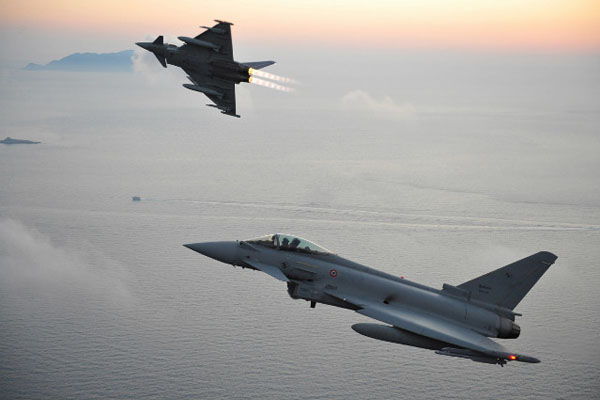
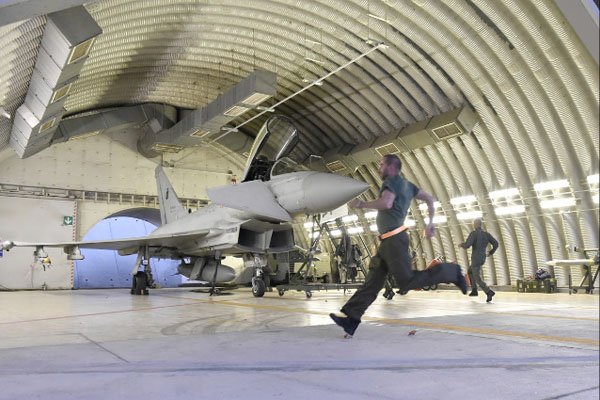
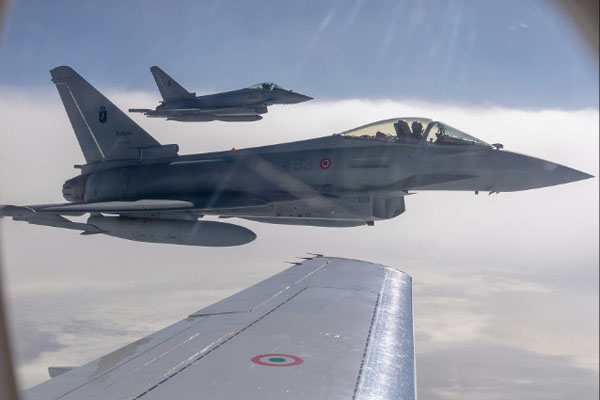
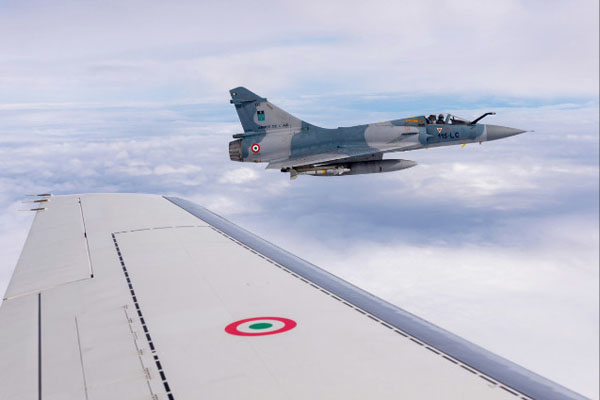
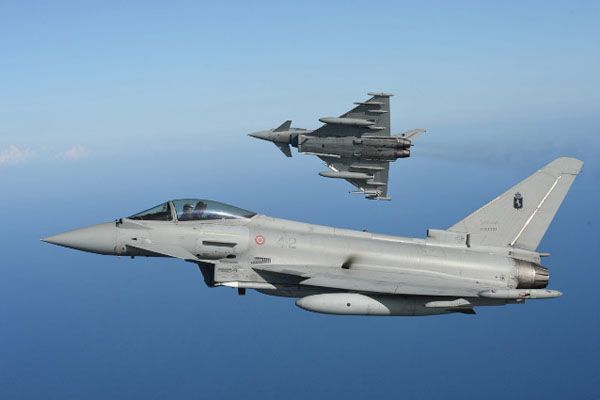
Pilots and Eurofighter aircraft of the 4th Wing in Grosseto, of the 36th Wing in Gioia del Colle and of the 37th Wing in Trapani took off in very few minutes after the scramble order to intercept and escort the suspect aircraft out of national borders. A sort of "flying relay" ensured continuity with the French and Tunisian air defence assets.
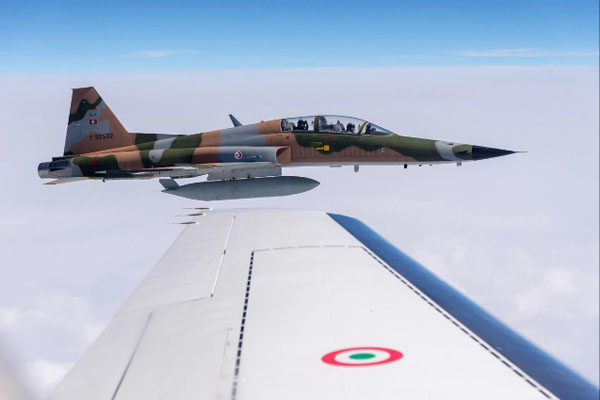
A Tunisian F-5 aircraft taking part in the exercise crashed down into Tunisian territorial waters. The pilot saved himself/herself thanks to the ejection seat. The pilot was located and then rescued by a Tunisian UH-60 helicopter.
Under the supervision and coordination of the Air Operations Command, national assets took part in the search and rescue activities. The assets included a sea patrol aircraft P72-A of the 41st Wing in Sigonella, Catania, with a crew composed of Air Force and Navy personnel. A HH-212 helicopter of the 80th SAR Centre in Decimomannu, Cagliari, was also involved.
Air Defence - namely the surveillance and defence of national airspace - is a responsibility primarily pertaining to the Air Force.
It is an activity performed throughout the year, 24/7, through an integrated defence system that blends with the systems of other NATO countries also in peacetime.
Two Radar Groups located in Poggio Renatico (Ferrara) and Licola performs the surveillance, identification and control tasks.
The 4th Wing, the 36th Wing and 37th Wing perform flying operations and are equipped with Eurofighter aircraft.
The Air Force also regularly contributes to Air Policing to support other countries with no autonomous air defence capabilities: Albania since 2009, in cooperation with Greece, Slovenia since 2004, in cooperation with Hungary, and NATO newcomer ally Montenegro since last June.
Following specific NATO agreements aiming to strengthen airspace protection measures, over time Italian Air Force jets have also contributed to air defence in the Baltic region - namely Estonia, Lithuania, and Latvia - and in Bulgaria. The Italian Air Force did the same, along with other NATO Countries on a rotational basis, for Iceland, from where Italian crews and fighters came back after a four-week air protection mission.
 -
-